01What is the mission of SPIRITT?+
Making entrepreneurship accessible to anyone. We believe entrepreneurship can and should be a way of life, and not just a job title.
02How is SPIRITT different from ChatGPT or Copilot?+
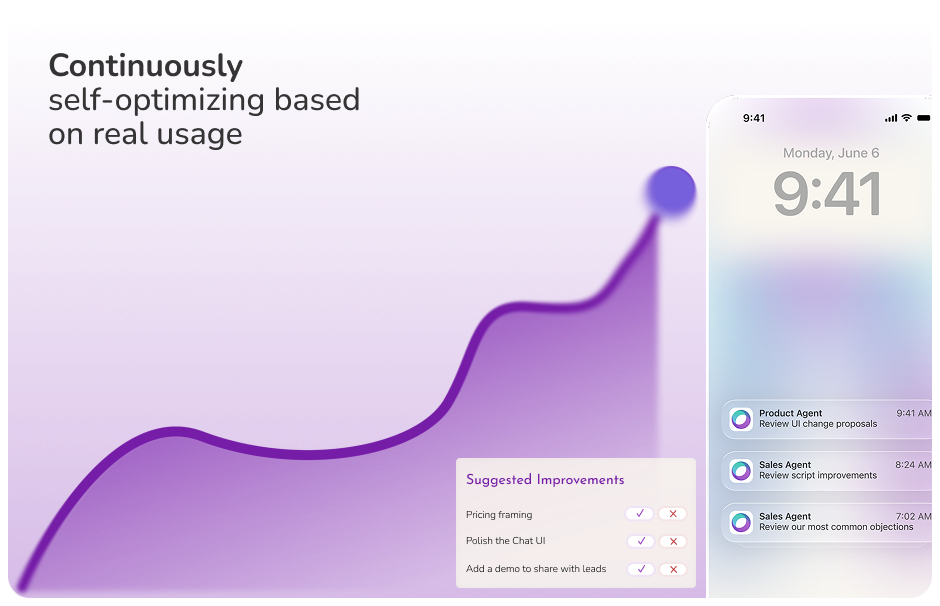
SPIRITT is an autonomous workspace, not just a chatbot. It can plan, build software, deploy to production, connect to real services, and run continuous jobs in the background without constant supervision. Unlike passive chatbots that only react when you message them, SPIRITT is also active. It monitors what it built, watches for issues, and proactively suggests improvements or ships fixes on its own.
03How is it different from Claude Code?+
They are built for different missions. Claude Code is an exceptional CLI tool optimized for developers working directly on their local computer. SPIRITT is an autonomous operating system built for cloning real-world work into the cloud and building production-grade products that run autonomously.
While SPIRITT can securely connect to your local computer, local file editing is just one feature, not its sole purpose. Furthermore, while both offer cutting-edge coding capabilities, Claude Code is a subset of what SPIRITT offers. SPIRITT utilizes a state-of-the-art harness that combines Claude models with every other frontier lab's models (OpenAI, Google, and more) and our own custom models into a single agent. This multi-model architecture allows SPIRITT to not just write code, but to seamlessly develop, host, and maintain complex, production-ready products. Beyond building software, it mimics the real-world work you do, running it at scale in the cloud autonomously with zero human intervention, requiring only your high-level governance.
04How is it different from Lovable, Replit, Base44, or any other AI app builder?+
App builders like Lovable, Replit, and Base44 focus mostly on front-end generation and rapid UI prototyping. SPIRITT builds full-stack apps, including databases, complex backend logic, background cron jobs, and external integrations, then autonomously maintains and self-optimizes them in production. It also helps you with marketing, fundraising, and running the company. And SPIRITT is active, not passive: it watches your live app, spots problems, runs A/B tests, and ships UX improvements on its own around the clock.
05How is it different from OpenClaw?+
OpenClaw runs locally on your computer. SPIRITT provides a secure cloud computer with access from everywhere, plus hybrid access to your personal computer if needed. SPIRITT offers security from hacks and prompt injections, noticeably better capabilities and resources, and continuous operation. You can even just ask SPIRITT to run your existing OpenClaw on the cloud with computer and AI connection, and it will just happen.
06Can it make videos or images?+
Yes. SPIRITT can natively generate or integrate into services that generate images or video, and orchestrate them directly within your workflows or products.
07Is it accessible from anywhere?+
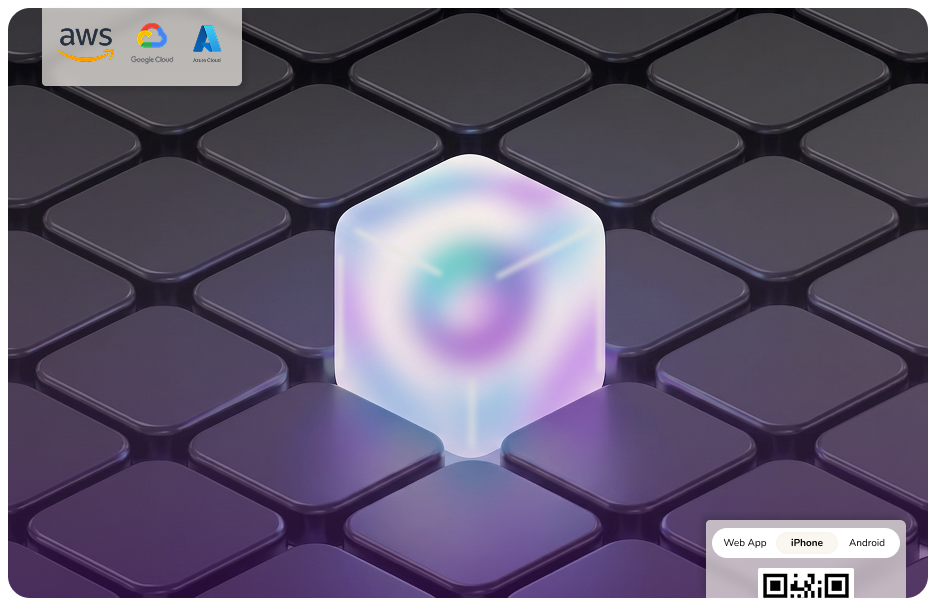
Yes! You can access SPIRITT from our local desktop app, via the web, or from our mobile app. All your work and conversations are perfectly in sync, so you can start a task on your laptop and seamlessly switch to your phone. It makes it dangerously easy to become a workaholic, so be careful (but it's fun!).
08What does "self improving" mean?+
SPIRITT trains itself, builds itself tools and programs itself to fit your needs 24/7. The more you use it the better it becomes to your needs.
09How does SPIRITT autonomously maintain things we build?+
SPIRITT runs in a persistent workspace. It can monitor logs, watch users use, identify UX problems and much more, then deploy a fix or an AB test for a new idea autonomously, 24/7.
10Do I need to know how to code to use SPIRITT?+
No. You just describe what you want to achieve, and SPIRITT will write the code, set up the infrastructure, and build the interfaces for you. For developers, you can dive deep and code alongside it.
11Can I connect my own databases and external tools?+
Yes. SPIRITT workspaces have full internet access, can securely store API keys, and can natively integrate with external services via webhooks, REST APIs, or built-in connectors.
12Can SPIRITT build mobile apps or just web?+
Yep. SPIRITT can build full-stack web applications, deploy backend services, write mobile apps, create Chrome extensions, and more. If it involves code, it can build it.
13What happens if SPIRITT makes a mistake?+
You can always rollback changes. You can ask SPIRITT to explain its logic, read its logs, or manually fix the code yourself before asking it to continue.
14Can SPIRITT build games?+
Yes. SPIRITT can build mobile, web, and desktop games.
15Can SPIRITT use my existing tools?+
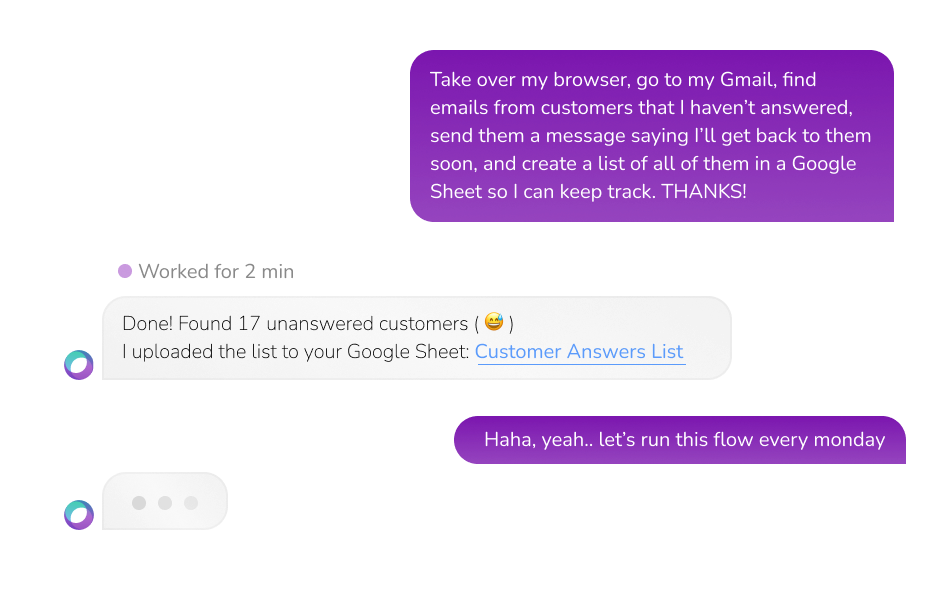
Yes. Either through integrations, or via your browser/computer. It is an operator that operates in the same interface you operate.
16Does SPIRITT fit multiplayer?+
Absolutely. SPIRITT is built for teams. You can invite collaborators into a shared workspace and work side by side with each other and the Digital SPIRITTs in real time, perfectly in sync across web, desktop, and mobile. We rely on it this way every day at SPIRITT, running much of our own company collaboratively inside it.
17Can it help me with marketing?+
Yes, and across the full funnel and beyond. SPIRITT can handle research and positioning, landing pages, content, email campaigns, SEO, ads, and analytics. It does not stop at ideas: it builds and ships the actual assets, watches how they perform, and iterates on them autonomously.
18Can it help with finance?+
Yes, for operational finance work. SPIRITT can build budgeting and forecasting models, pull numbers from your tools into clear dashboards, automate invoicing and reporting, and reconcile data across sources. It is a powerful assistant for finance operations, not a licensed financial advisor, so treat its output as a strong starting point and keep a human in the loop for regulated decisions.
19What does "autonomous" mean?+
It means the Digital SPIRITTs do not just do exactly what you ask, one step at a time. You give them a goal, and they plan, take action, check the results, and keep working toward that goal continuously without waiting for the next instruction. They run in the background around the clock, adapting as things change until the goal is met.