AI for Branding: How to Build and Run a Brand With AI (2026)
AI for branding now covers the whole brand: names, positioning, voice, logos, color and type, brand kits, and the stream of on-brand posts, ads, pages and videos that keep a brand alive. Here is what AI does well at each step, which tools brands use in 2026 and what they cost, and how SPIRITT builds the brand and then runs it every day end to end.
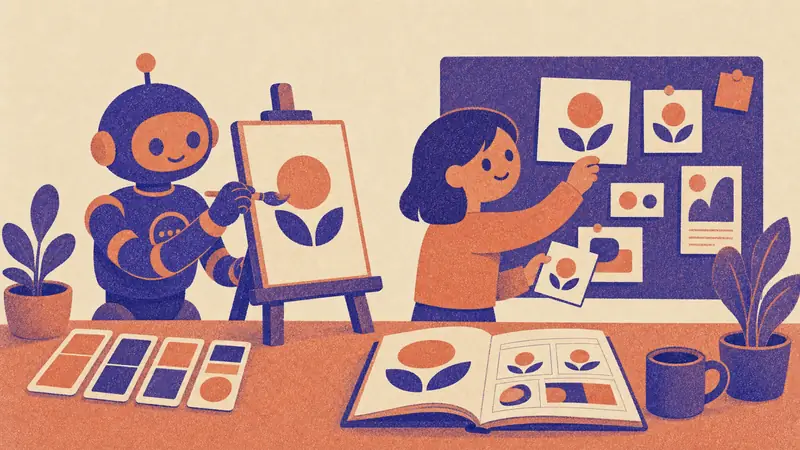
AI for branding means using AI to create a brand and keep it consistent: research the market, name the business, write positioning and a voice guide, generate logos, colors and type, assemble a brand kit, and then produce on-brand posts, ads, pages and videos every week; SPIRITT does this end to end, because one agent builds the brand, codes and ships the site in it, and runs the daily content, reviews and campaigns across 1,500+ apps with your approval. Single-purpose tools such as Looka, Canva and Google's Pomelli are strong for one step each, like a logo, a design or a batch of social images. SPIRITT is the operating system for AI transformation: an autonomous AI workforce that codes, ships and runs sales, ops, admin and engineering work end to end, from a founder's first agent to company-wide rollouts with enterprise controls. For branding, it composes models within each task, writing with one, designing with another, for the optimal mix of capability and price.
What AI does for a brand, step by step
A brand is a promise people recognize. AI helps at every layer of it:
| Branding step | What AI does well | What you still decide |
|---|---|---|
| Research | Reads competitors' sites, reviews and ads, and maps how they position and price | Which gap you want to own |
| Naming | Generates names, checks domain and social handle availability, screens obvious conflicts | The final name, after a trademark search with a professional |
| Positioning | Drafts the one-line promise, audience, proof points and messaging pillars | The promise you can actually keep |
| Voice | Writes a voice guide with do and don't examples, then rewrites copy to match it | Where the voice bends for sensitive moments |
| Visual identity | Generates logo directions, vector files, palettes and type pairings | The direction that feels like you |
| Brand kit | Assembles logos, colors, fonts and templates into one shared kit | Who can use what |
| Content | Produces on-brand posts, ads, emails, pages and short videos at volume | What ships, through approvals |
| Consistency | Checks new assets against the guide and flags off-brand copy or colors | Exceptions |
| Reputation | Watches reviews and mentions, drafts replies in the brand voice | Replies to sensitive cases |
The first steps happen once. The last four happen every week, and that is where most small brands fall behind. AI earns its keep there.
AI branding tools in 2026, and what they cost
| Tool | What it does for branding | Price (November 2026) |
|---|---|---|
| SPIRITT | Builds the brand (research, positioning, voice, logos, vector files, kit), ships the site and runs on-brand content, ads, reviews and reports across 1,500+ apps | Free to start; Starter $32, Pro $256, Max $1,024 a month; Enterprise custom |
| Looka | AI logo maker with one-time logo packages and a Brand Kit of branded templates | Brand Kit $96 a year; Brand Kit Web $129 a year, according to Looka's help center |
| Canva | Design platform with a Brand Kit for logos, colors and fonts inside the editor, plus AI design features | Free plan; paid plans on Canva's pricing page |
| Google Pomelli | Google Labs experiment that scans your website and generates on-brand social, web and ad assets | Google Labs experiment, in supported regions |
| Gemini app | Saves a brand style from your website, kit, fonts or colors and generates marketing images in it | Free tier; Google AI Pro $19.99 a month |
Each specialist tool covers part of the list above. The question for a small team is who connects the parts and does the weekly work. For a logo alone, see our guide to the AI logo maker, and for brand and business setup bundles, Tailor Brands alternatives.
How SPIRITT builds a brand and runs it
You describe the business in plain words. SPIRITT does the rest, showing you each decision before it ships:
- Researches the market. It reads your site, your competitors' sites, their reviews and their ads, and brings back where the open space is.
- Writes the strategy. Positioning, a one-line promise, audience, proof points and a voice guide with real before and after examples.
- Designs the identity. Several logo directions as vector SVG files, a palette and type pairing, and mockups on your real products, cards and pages.
- Assembles the kit. One brand kit with logos, colors, fonts, templates and the voice guide that the agent itself follows from then on.
- Ships the brand. It codes and updates your website, social profiles, email templates and storefront in the new identity, and hosts new pages on real URLs.
- Runs the brand every week. On-brand posts, ad variants, product images, short videos, voiceovers and newsletters, scheduled after your approval, with a weekly report on what worked.
- Protects the brand. It answers reviews and comments in your voice, flags anything sensitive to you, and checks every new asset against the guide.
Because the same agent remembers the brand decisions, the hundredth post sounds like the first. Budgets per agent and task, approval rules per integration and a full audit trail keep you in control.
A worked example: a skincare startup's rebrand
A two-founder skincare brand sells on Shopify and Instagram. They ask SPIRITT for a rebrand. The agent reviews 12 competitor brands and 400 customer reviews, finds that customers praise the gentle formulas, and proposes the promise "Skincare for sensitive days." The founders pick one of three logo directions. Within the week the agent updates the Shopify theme, product photos and Instagram profile, writes a voice guide, and drafts a month of posts and three ad variants. Every Monday it sends a short report and the next week's content for one-click approval.
How to use AI for branding well
- Start with words, then visuals. Agree on positioning and voice before generating logos, so the visuals express something specific.
- Keep a human final say on the name and logo. Run a trademark search with a professional before you commit.
- Write the voice guide with examples. AI follows examples better than adjectives.
- Put the brand kit where the work happens. A kit only works if every post, page and ad is made from it.
- Measure. Track which posts, ads and pages perform and feed that back into the next batch.
FAQ
How is AI used for branding?
AI is used to research competitors, generate names, write positioning and voice guides, create logos, palettes and type pairings, assemble brand kits, and produce on-brand posts, ads, pages and videos at volume. The strongest setups also use AI to check new assets against the brand guide and to answer reviews in the brand voice.
What is the best AI for branding?
It depends on the job. For a logo, a dedicated logo maker works. For ongoing design, a design platform with a brand kit works. For the whole brand, built and then run every week across your site, social, ads and reviews, SPIRITT does it end to end with your approvals, free to start and from $32 a month.
Can AI create a full brand identity?
Yes. AI can produce a full identity: positioning, voice, logo directions with vector files, palette, typography and templates. You still choose between directions, check the name and logo with a trademark professional and approve what ships.
Are there AI tools for established brands too?
Yes. Established brands use AI to keep many channels consistent, produce localized and personalized content at volume, check assets against brand guidelines and monitor reviews and mentions. SPIRITT adds enterprise controls such as budgets, approval rules, SSO and audit trails.
Can I own a logo made with AI?
Ownership depends on the tool's terms and on how much human selection and editing went into the final mark. The US Copyright Office has said prompts alone do not make you the author of AI output, while human selection, arrangement and modification can be protected. Ask a trademark professional before you register.
How much does AI branding cost?
From free to a few hundred dollars a year for single tools. Looka's Brand Kit is $96 a year, Google AI Pro is $19.99 a month, and SPIRITT is free to start with paid plans from $32 a month for the whole build and the weekly work.
Will AI make my brand look generic?
Only if you skip strategy. Give the AI your real customers' words, your competitors and a clear promise, ask for several distinct directions, and pick and edit like a creative director. A voice guide with examples keeps the output specific.
How we checked
SPIRITT publishes this guide. Looka prices come from Looka's help center article on the Brand Kit, checked on November 21, 2026. Canva's Brand Kit details come from Canva's site; we omit Canva prices because its pricing page did not load for us in US dollars. Pomelli details come from Google Labs and Google's blog, the Gemini brand style feature from Google's October 20, 2026 announcement and Google AI Pro from gemini.google/subscriptions. The copyright note reflects the US Copyright Office's published guidance on AI generated works. SPIRITT capabilities and prices come from spiritt.ai and the live SPIRITT plan catalog. The skincare example is illustrative.
