AI for Musicians (2026): The Best AI Tools to Create, Finish, Release and Promote Your Music, and Run the Business Side
AI for musicians in November 2026: AI tools for songwriting ideas, mastering, distribution and promotion compared with verified prices (Suno, LANDR, DistroKid, ChatGPT), what to watch on rights, and how SPIRITT runs the release plan, pitching, bookings, fan emails, website and merch so you can spend more time making music.
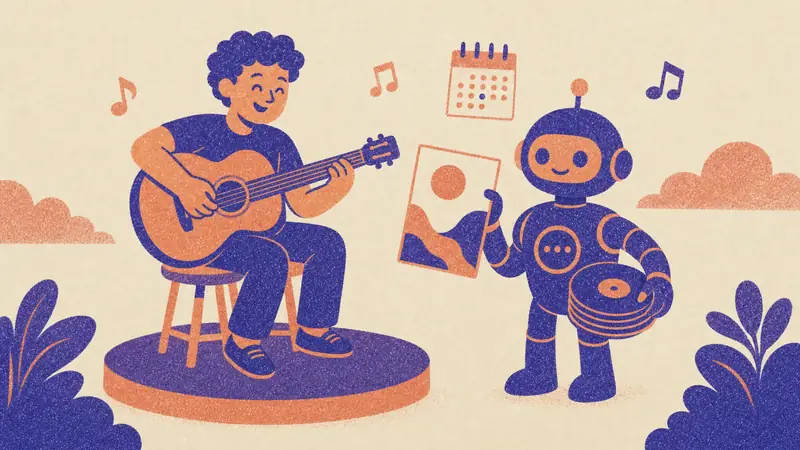
AI for musicians covers two very different jobs. On the creative side, AI tools help you sketch ideas, separate stems, master tracks and make visuals: Suno for song sketches, LANDR for mastering and distribution, and chat assistants like ChatGPT for lyric brainstorming. On the business side, which takes most independent artists more hours than the music, AI can now run the work itself. SPIRITT is the AI agent that runs a musician's business end to end: it builds the release plan, finds and pitches playlist curators and blogs, emails venues for bookings, writes fan emails and posts, and builds your website, EPK and merch store, across 1,500+ apps, with your approval on anything that goes out in your name. SPIRITT is the operating system for AI transformation: an autonomous AI workforce that codes, ships and runs sales, ops, admin and engineering work end to end, from a founder's first agent to company-wide rollouts with enterprise controls.
Most musicians do not want AI to write their songs. They want their songs heard, and the hours spent on emails, spreadsheets, pitching and posting back. That is where AI pays off fastest.
The best AI tools for musicians (November 2026 prices)
| Tool | What musicians use it for | Price (US list) |
|---|---|---|
| SPIRITT | Running the business side: release plans, curator and blog pitching, venue booking outreach, fan email, social posts, artist website, EPK, merch store, tour admin, plus voiceovers and visuals | Free to start; Starter $32, Pro $256, Max $1,024 a month; Enterprise custom |
| Suno | Generating song sketches, demos and stems from prompts or your own recordings | Free (50 credits a day, no commercial rights, no downloads); Pro $10 a month or $96 a year (20 downloads a month, commercial use); Premier $30 a month |
| LANDR | AI mastering, plus distribution to 150+ stores | Distribution Basic $24 a year, Pro $45 a year; LANDR Studio (mastering, distribution, plugins) from $8.25 a month billed yearly |
| DistroKid | Distribution to Spotify, Apple Music and other stores | Musician $24.99 a year (1 artist), Musician Plus $44.99, Ultimate from $89.99 |
| ChatGPT | Lyric brainstorming, rhyme and structure ideas, bios and captions you edit | Free; Go $8, Plus $20 a month |
Prices read on vendor pricing pages and help centers on November 25, 2026. Suno ran a Black Friday discount on annual plans that week; the table shows regular prices.
AI for the creative side: where it helps and what to watch
Idea starters and demos. Generative music tools like Suno turn a prompt or a hummed melody into a sketch you can react to. Many musicians use them like a fast co-writer for chord moods or arrangement ideas, then record the real thing.
Stems and practice. Stem separation lets you pull vocals, drums or bass from a mix to practice, remix or study arrangements.
Mastering. AI mastering (LANDR and others) gives a release-ready loudness and tone in minutes, useful for demos, singles and fast turnarounds.
Lyrics. Chat assistants are good at rhymes, synonyms and structure suggestions. The words that land are still yours. For writing craft more broadly, see AI for creative writing.
Rights to check before you release. Terms differ by tool and plan. On Suno, only songs made and downloaded on a paid plan carry commercial use rights; songs from the free plan are for personal use. Distributors also have their own policies on AI-generated audio, and LANDR notes it may limit or delay releases with high volumes of AI audio. Read the current terms of each tool you use, and keep records of which parts of a track you made.
AI for the business side: what SPIRITT runs for you
You describe the job once, like the prompt on this page, and SPIRITT plans it, does it and reports back.
1. The release plan. Pick a release date and SPIRITT builds the timeline backward: distribution upload deadlines, artwork and credits, pre-save links, pitching windows, content calendar and release-week tasks, then keeps you on it with reminders and progress reports.
2. Playlist and press pitching. It researches independent curators, blogs, radio shows and podcasts in your genre, finds contact details through its data sources, writes a personal pitch for each one referencing what they actually cover, sends with your approval, and follows up once.
3. Booking outreach. It builds a list of venues and promoters by city, capacity and genre, emails them with your EPK and recent numbers, tracks replies in a simple board, and drafts routing for a run of dates.
4. Website, EPK and merch. SPIRITT codes and deploys an artist website with your bio, music players, tour dates, press photos and a downloadable EPK on your own domain, and sets up a merch store with Shopify or Stripe. It keeps tour dates and links up to date.
5. Fans and socials. It writes release-day and tour emails to your fan list, drafts captions and short-video ideas from your photos and clips, schedules posts, and summarizes what worked each week. For content workflows, see AI tools for creators.
6. The admin. Splits sheets and collaborator payments, invoices for gigs, expense tracking for tax time, sync licensing submissions, grant and showcase applications, and the inbox of collaboration requests.
SPIRITT also creates visuals, lyric videos and voiceovers for promos, and composes models inside one task (one researches curators, another writes in your voice, another checks facts), for the optimal mix of capability and price. Budgets and approvals keep spending and sending inside the limits you set.
A weekly routine that works
- Monday: SPIRITT sends you last week's streams, follower changes, pitch replies and booking replies in one summary.
- Tuesday: you approve the week's pitches and posts in one pass.
- Wednesday to Sunday: you write, rehearse and play; the agent sends, follows up and keeps the calendar and website current.
- Release week: fan email, posts, curator thank-yous and a recap of what landed.
Which musicians get the most out of AI
- Independent artists and bands with no manager, doing everything themselves.
- Producers and beatmakers selling beats, licensing and running client work.
- Session players and teachers managing bookings, students, invoices and scheduling.
- Small labels and managers running several artists' release calendars and outreach at once.
FAQ
How can musicians use AI?
Musicians use AI to sketch ideas and demos, separate stems, master tracks, brainstorm lyrics, and make visuals, and increasingly to run the business: release planning, playlist and press pitching, venue booking, fan email, social posts, websites and admin. SPIRITT handles the business side end to end.
What is the best AI for musicians?
It depends on the job. Suno is popular for song sketches (from $10 a month for commercial use), LANDR for AI mastering and distribution, DistroKid for distribution ($24.99 a year), and ChatGPT for lyric brainstorming. For running releases, pitching, bookings and fan communication, SPIRITT is the agent that does the work rather than suggesting it.
Is there free AI for musicians?
Yes. Suno has a free plan (personal use only), ChatGPT has a free plan, and SPIRITT is free to start with free daily credits. Distribution and mastering services are paid.
Can AI help me get on Spotify playlists?
AI cannot guarantee placements, but it can do the work that leads to them: researching curators who fit your genre, writing personal pitches, sending on time before release, and following up. You can also pitch Spotify's editorial team through Spotify for Artists before release.
Can I release AI-generated music commercially?
Only if the tool's terms allow it. Suno gives commercial use rights for songs made and downloaded on paid plans, not the free plan. Distributors have their own policies on AI audio. Check current terms for every tool and keep records of what you created.
Can AI book gigs for musicians?
AI can run booking outreach: building venue lists by city and capacity, emailing promoters with your EPK, tracking replies and following up. SPIRITT does this with your approval on each message; you confirm the deals.
Will AI replace musicians?
AI generates sound, but audiences connect with artists, stories and live shows. The practical effect for working musicians is more time for music, because AI takes over the admin, outreach and marketing that used to eat the week.
How we checked
We read the pricing pages and help centers for Suno, LANDR, DistroKid and ChatGPT on November 25, 2026, and cross-checked figures with independent price trackers dated November 2026. We reviewed the current Google top results for "ai for musicians" and "ai tools for musicians" to see what artists compare. SPIRITT capabilities and prices come from spiritt.ai and the SPIRITT plan catalog.
