AI for Medical Imaging (2026): How AI Reads, Sorts and Reports Medical Images, the FDA Numbers, and the Imaging Admin an Agent Runs
What AI for medical imaging does in November 2026: triage, detection, measurement, image reconstruction and report drafting, the FDA's list of 1,614 AI-enabled devices (76% in radiology), the main kinds of vendors, how hospitals evaluate them, and the scheduling, follow-up and reporting operations around imaging that SPIRITT runs end to end.
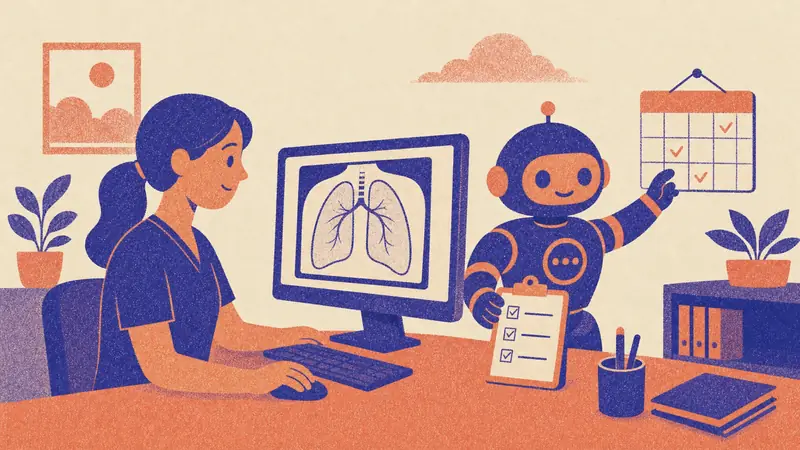
AI for medical imaging means software that helps clinicians acquire, read, prioritize, measure and report medical images such as X-rays, CT, MRI, ultrasound and mammograms. In November 2026 the US FDA's public list holds 1,614 AI-enabled medical devices, and 1,230 of them (76%) were reviewed by its radiology panel, which makes imaging the field where clinical AI is most established. Those devices are bought from imaging specialists and scanner makers and are used under clinician oversight. SPIRITT is an AI agent for the work around the images: it codes, ships and runs the scheduling, prior authorization paperwork, turnaround dashboards, follow-up tracking and vendor evaluation that imaging teams handle every day, with approvals and an audit trail. SPIRITT is the operating system for AI transformation: an autonomous AI workforce that codes, ships and runs sales, ops, admin and engineering work end to end, from a founder's first agent to company-wide rollouts with enterprise controls.
This guide is informational. It explains what imaging AI does and how organizations adopt it. It does not give medical advice, and SPIRITT does not interpret medical images.
What AI does in medical imaging
Imaging AI falls into six practical jobs. Most cleared products do one or two of them for a specific body part, modality and finding.
- Triage and worklist prioritization. Software analyzes studies as they arrive and flags suspected urgent findings so they move up the radiologist's worklist. Stroke, pulmonary embolism and intracranial hemorrhage were early use cases.
- Detection and characterization. Tools mark suspected findings, such as lung nodules on chest CT or areas of interest on mammograms, for the reader to review.
- Measurement and quantification. AI measures volumes, sizes and other values that radiologists would otherwise measure by hand, which saves clicks and makes follow-up comparisons more consistent.
- Image acquisition and reconstruction. Scanner makers use AI to reconstruct images from faster or lower-dose scans and to automate routine measurements on the device.
- Report drafting and impressions. Generative AI drafts impressions or report text from the radiologist's dictated findings, and checks reports before they are signed.
- Follow-up and care coordination. Systems track recommended follow-up exams and alert care teams, so incidental findings are not lost.
The first five sit inside the clinical read and are regulated or validated as such. The sixth, and everything else around the read, is operations: where general business AI agents help most.
The FDA numbers, November 2026
| Measure | Value | Source |
|---|---|---|
| AI-enabled devices on the FDA list | 1,614 | FDA list, page updated September 4, 2026, decisions through June 29, 2026 |
| Reviewed by the radiology panel | 1,230 (76%) | Same list, lead review panel |
| Next largest panels | Cardiovascular 154, neurology 73 | Same list |
| Cleared through 510(k) | 1,553 (96%) | Same list, submission type |
| Devices with a 2025 decision | 335 | Same list, year of final decision |
The FDA describes its list as a resource to identify AI-enabled devices authorized for marketing in the United States and says it is not comprehensive and is updated periodically, so the newest months are always incomplete. Authorization means a device may be marketed for its stated use. It does not by itself show that a device improves outcomes at a particular hospital, which is why local validation matters.
Who sells AI for medical imaging
| Vendor type | Examples named most often | What they sell | How it is bought |
|---|---|---|---|
| Scanner makers | GE HealthCare, Siemens Healthineers, Philips | AI built into scanners and their imaging software: reconstruction, automated measurements | With the equipment or as software options |
| Triage and detection platforms | Aidoc, Viz.ai | Many cleared algorithms under one platform, worklist and care-team alerts | Enterprise contracts, quotes |
| Reporting AI | Rad AI | Reporting, generative impressions, follow-up management | Enterprise contracts, quotes |
| Specialty detection | Lunit, Annalise.ai | Mammography and chest X-ray detection | Enterprise contracts, quotes |
| Operations agent | SPIRITT | The non-clinical work around imaging: scheduling, paperwork, dashboards, follow-up lists, vendor evaluation | Free to start; Starter $32, Pro $256, Max $1,024 a month; Enterprise custom |
Clinical imaging vendors do not publish list prices; contracts depend on volume, modules and sites. Two 2026 milestones show where the field is heading: Aidoc announced FDA Breakthrough Device Designation in June 2026 for First Read, an investigational tool that drafts preliminary chest X-ray report text for radiologist review (designation is not clearance), and Rad AI markets generative impressions that radiologists edit and sign.
How hospitals evaluate imaging AI
Health systems that adopt imaging AI well tend to follow the same steps:
- Start from a bottleneck. Pick two or three findings or workflows where time or misses cost the most, and write down who acts on each alert.
- Measure a baseline. Pull several months of timestamps from the RIS or PACS: scan complete to report signed, by modality and time of day.
- Validate locally. Run a pilot on your own patients and scanners and compare against the baseline and your radiologists' reads.
- Plan integration. Most of the effort is wiring results into PACS, the worklist, the reporting system and the EHR.
- Govern it. Keep an inventory of every algorithm, its version, its cleared use and who owns monitoring. Re-check performance after updates.
Each of those steps produces paperwork, spreadsheets and follow-up. That is the part an agent can take off the team.
Imaging workflows SPIRITT runs end to end
SPIRITT is an AI agent with its own isolated cloud computer, a browser, a terminal and 1,500+ app connections. For an imaging department or outpatient imaging center it acts like an operations coordinator and analyst who also codes. It never reads images or makes clinical calls; staff approve anything that reaches a patient or a payer.
- Turnaround dashboards. Reads RIS exports, codes the analysis in Python, and keeps a dashboard of scan-to-signed time by modality, site and hour, refreshed on a schedule.
- Scheduling and reminders. Drafts appointment confirmations, prep instructions written by your staff, and reminder texts or emails, and fills cancellations from a waitlist for staff approval.
- Prior authorization packets. Gathers the order, clinical notes and payer form into a packet for staff to check and submit, and tracks status. See AI for healthcare administration.
- Follow-up tracking. Turns follow-up recommendations that radiologists already wrote in finalized reports into a tracked list with due dates, owners and reminder drafts, so nothing falls through.
- Billing handoff. Prepares claim worklists and denial follow-ups for the billing team. See AI for medical billing.
- Vendor evaluation. Builds the comparison sheet for an imaging AI purchase from vendor documents and the public FDA list, and drafts the pilot plan and baseline queries.
- AI inventory and monitoring. Keeps the register of every algorithm in use, its version and owner, and reminds owners when a review is due.
- Phones and front desk. Answers routine calls about hours, directions and rescheduling, and hands anything clinical to a person. See AI medical receptionist.
SPIRITT composes models from Anthropic, OpenAI, Google and others inside each task, plus its own Kay models, so reading documents, writing code and drafting messages each get the strongest mix. Long jobs keep running on its cloud computer after you close the laptop.
A worked example: an outpatient imaging center
A three-site outpatient imaging center wants to know why MRI reports are slow on Mondays. SPIRITT reads six months of exported timestamps, finds that weekend exams queue up and are signed Monday afternoon, and builds a dashboard the operations manager checks each morning. It then drafts a staffing proposal with the numbers, keeps a follow-up tracker from finalized reports, and sends staff a daily list of patients to call. The example is a composite with made-up details.
Privacy, security and control
Imaging data is protected health information. Work with your compliance team, start with test or de-identified data, and connect live systems only through approved access. SPIRITT gives every workspace its own isolated cloud computer, injects keys at the network boundary so agents never see them, applies allow, ask or never rules to each integration with single-use approvals, and keeps a full audit trail of every action. Enterprises can deploy it in SPIRITT's cloud, their own cloud, on their own servers or fully air-gapped. See SPIRITT security and agentic AI in healthcare.
FAQ
What is AI for medical imaging?
It is software that helps acquire, read, prioritize, measure and report medical images. Common uses are worklist triage, detection of suspected findings, automated measurements, faster or lower-dose image reconstruction and report drafting, always with clinician review.
How is AI used in medical images today?
Mostly inside radiology: flagging urgent studies, marking suspected findings for review, measuring structures and drafting impressions. Around the read, AI agents handle scheduling, paperwork, dashboards and follow-up tracking.
How many AI medical imaging devices has the FDA authorized?
The FDA's AI-enabled device list holds 1,614 devices with decisions through June 29, 2026, and 1,230 of them (76%) were reviewed by the radiology panel. The FDA notes the list is not comprehensive.
Does AI replace radiologists?
No. Cleared imaging AI supports radiologists, who review findings and sign reports. The practical change is less time on routine steps and faster attention to urgent studies.
Can SPIRITT read X-rays or CT scans?
No. SPIRITT does not interpret medical images or give medical advice. It runs the operations around imaging: scheduling, prior authorization packets, turnaround analysis, follow-up lists, billing handoff and vendor evaluation.
What is the best AI for medical imaging?
It depends on the finding, modality and workflow. Scanner makers, triage platforms such as Aidoc and Viz.ai, reporting AI such as Rad AI and specialty tools such as Lunit cover different jobs. Validate on your own data before buying.
How much does AI for medical imaging cost?
Clinical imaging AI is sold on enterprise contracts and vendors do not publish list prices. SPIRITT, for the operations around imaging, is free to start, then Starter $32, Pro $256 or Max $1,024 a month, with Enterprise custom.
How we checked
SPIRITT publishes this guide. Device counts come from the FDA's List of AI-Enabled Medical Devices (page updated September 4, 2026), cross-checked against independent counts of the same list published in October and November 2026. Aidoc's First Read designation comes from Aidoc's June 25, 2026 announcement and MobiHealthNews coverage; Rad AI's products from radai.com; Viz.ai's from viz.ai, all read in November 2026. Vendor examples are the names most often cited in 2026 coverage, not a ranking. SPIRITT capabilities and prices come from spiritt.ai and the live SPIRITT plan catalog. We read the top Google results for "ai for medical imaging" on November 23, 2026. The imaging center example is a composite with made-up details, not a real customer. This page is not medical advice.
